
Albert Einstein & Charles Hapgood
Article researched and written by the author of this website, Tyler V. (BraveCat)
Posted Mar. 18th, 2026
Overarching Insight
The interaction between Albert Einstein and Charles Hapgood presents as the crux of scientific discovery regarding rapid changes that occur on Earth. From Hapgood's findings there have been 7 primary stages or evolutions in his theory going to the present day. Each one builds off the last with less and less resistance between eachother. From crustal displacement, cosmic rays, galactic forces, and major solar outbursts, this article covers the interstice between pre-modern speculation and modern evidence that is piling up in droves.
Intersection of Historical Catastrophism and Modern Evidence
Albert Einstein (1879–1955)
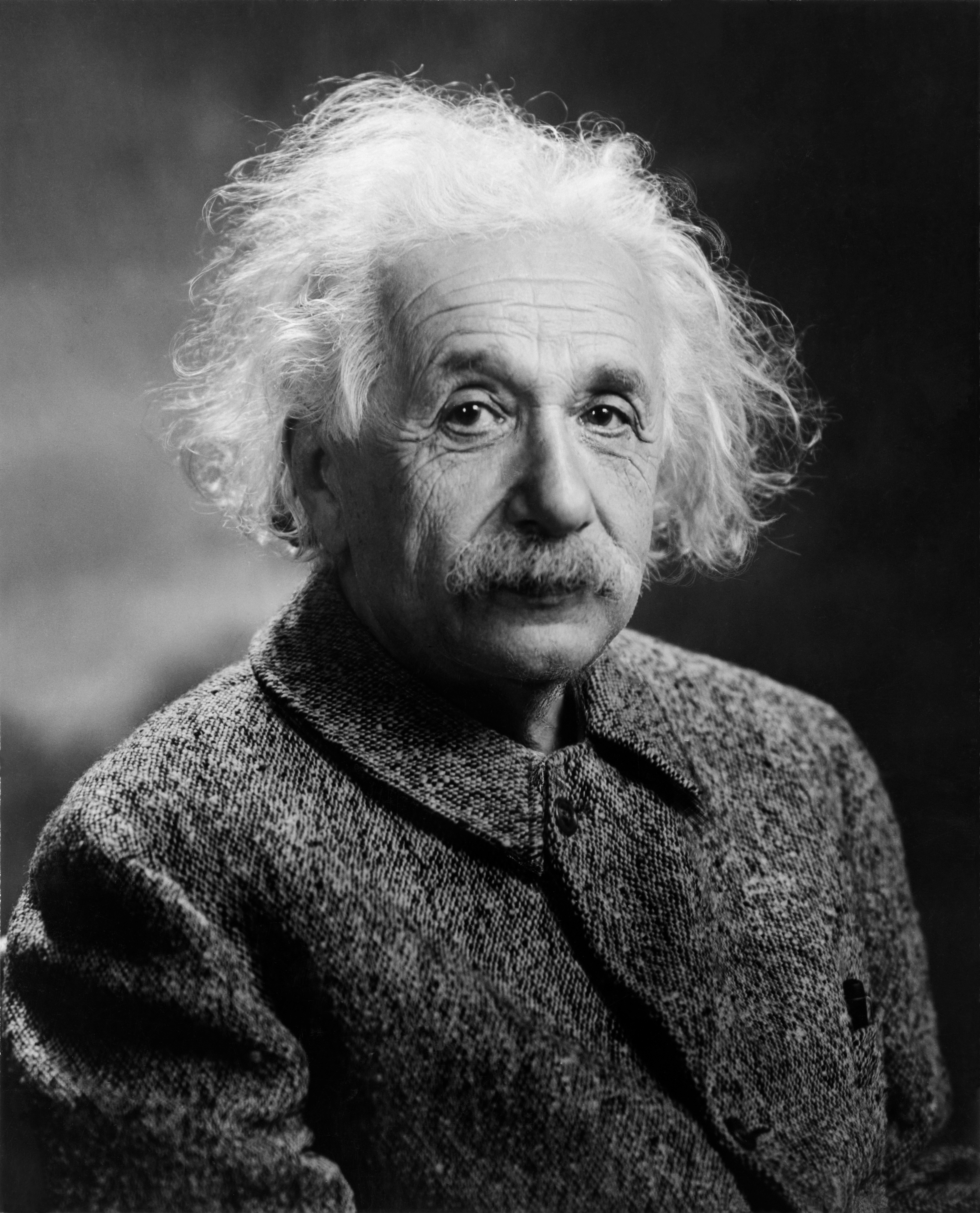
Role: German-American theoretical physicist; Nobel Prize in Physics (1921); universally regarded as one of the greatest scientists in history. His connection to catastrophism is peripheral but significant due to his engagement with Charles Hapgood's work.
Interaction with Catastrophism
In 1953, Hapgood sent Einstein a draft of his manuscript for Earth's Shifting Crust, which argued that the Earth's outer crust could undergo rapid displacement over the underlying mantle, causing dramatic pole shifts and climate catastrophes. Einstein was genuinely intrigued by the idea. He wrote a foreword for Hapgood's book (published 1958), in which he stated:
"I frequently receive communications from people who wish to consult me concerning their unpublished ideas. It goes without saying that these ideas are very seldom possessed of scientific validity. The very first communication, however, that I received from Mr. Hapgood electrified me. His idea is original, of great simplicity, and — if it continues to prove itself — of great importance to everything that is related to the history of the earth's surface."
Einstein's foreword was carefully qualified, he noted that the hypothesis was "not yet proven" and that much more evidence was needed. He was not endorsing crustal displacement as established fact but expressing genuine interest in the possibility and encouraging further investigation.
The specific aspect that interested Einstein was Hapgood's proposed mechanism: that the weight of asymmetric polar ice caps could create a centrifugal torque sufficient to displace the crust. Einstein, as a physicist, could evaluate this mechanical argument and found it worth considering, though he noted the crucial question was whether the forces involved were actually sufficient to overcome the friction between crust and mantle.
Einstein died in April 1955 before the book was published, so he never had the opportunity to evaluate subsequent criticisms or additional evidence.
Charles Hapgood (1904–1982)
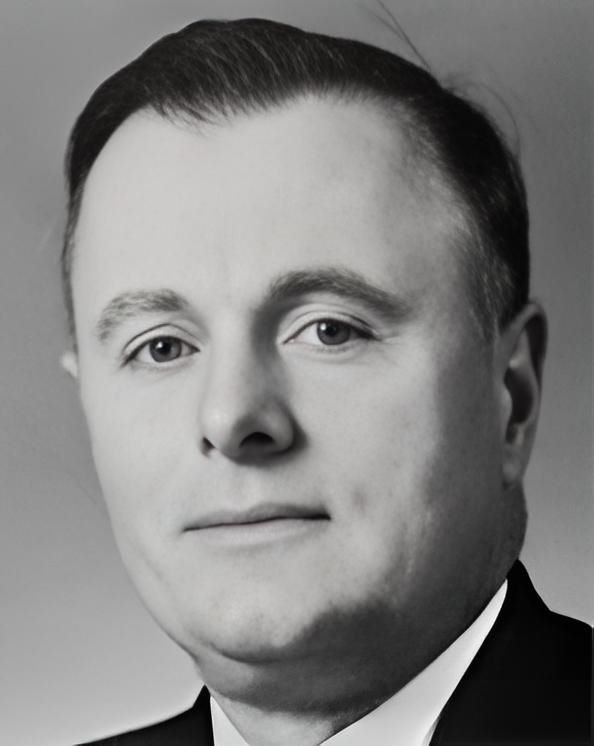
Role: American historian, professor of history and anthropology at Keene State College in New Hampshire; author of Earth's Shifting Crust (1958, foreword by Einstein), Maps of the Ancient Sea Kings (1966), and The Path of the Pole (1970).
Hapgood is one of the most important and widely cited figures in the alternative catastrophism tradition. His Earth Crustal Displacement hypothesis has had enormous influence, directly inspiring later pole shift theories and the "lost civilization" narrative.
Core Theory — Earth Crustal Displacement (ECD)
Hapgood proposed that the Earth's lithosphere (the rigid outer crust, approximately 30–100 km thick) periodically undergoes wholesale lateral displacement over the underlying asthenosphere (the partially molten, plastic layer beneath). This displacement:
Moves the entire outer shell as a single unit like the skin of an orange sliding over the fruit inside.
Occurs rapidly — Hapgood suggested it could happen within a geological short period.
Shifts the poles to new geographic locations, because the geographic poles are defined by where the spin axis intersects the surface.
Causes catastrophic consequences as regions suddenly shift to dramatically different latitudes and climates.
The Proposed Mechanism
The driving force, as Hapgood initially described it (drawing on the suggestions of Thomas Edgerton and later refined with Einstein's input), is the accumulation of asymmetric polar ice:
Polar ice caps grow unevenly due to unequal land and sea distribution at the poles.
As the ice mass becomes asymmetric, the centrifugal effect of Earth's rotation creates a torque on the outer crust.
When this torque exceeds the strength of the coupling between crust and mantle, the crust slips.
Maps of the Ancient Sea Kings
Hapgood's most influential and enduring contribution may be his analysis of ancient maps in his 1966 book. He examined a series of Renaissance-era maps and argued they incorporated much older source maps of extraordinary accuracy.
The Piri Reis Map (1513): A Turkish admiral's map that Hapgood argued showed the coastline of Antarctica as it would appear without ice — with geographical features largely confirmed by 20th-century seismic surveys. Since Antarctica was not "officially" discovered until 1820, Hapgood argued the map must derive from a far older source made when Antarctica was free of ice (which he estimated at ~4,000–6,000 BCE).
Other maps analyzed:
The Oronteus Finaeus Map (1531) — also purportedly showing ice-free Antarctica.
The Buache Map (1737) — showing what Hapgood interpreted as the subglacial topography of Antarctica.
The Zeno Map — purportedly showing accurate mapping of the North Atlantic.
Hapgood's argument: These maps imply a civilization with advanced cartographic and navigational technology long before any known civilization possessed it, implying a lost, sophisticated prehistoric culture.
Catastrophist Relevance
Hapgood represents the critical transition from geological/fossil catastrophism to civilizational catastrophism. He presented the idea that human civilization itself was shaped, reset, or destroyed by catastrophic pole shifts. This narrative, connecting geological catastrophe to human prehistory and the mystery of "lost" advanced civilizations, became enormously influential and underlies much of the modern alternative catastrophism tradition.
The Einstein-Hapgood Starting Point
When Einstein wrote his foreword for Hapgood's Earth's Shifting Crust in 1953, the specific question he found compelling was mechanical: Could the centrifugal torque from asymmetric polar ice masses overcome the frictional coupling between the lithosphere and asthenosphere, causing the crust to slip as a unit?
Einstein recognized that the answer depended on quantitative analysis to figure out whether the forces were actually large enough. He encouraged investigation but did not claim they were sufficient. In the decades since, the answer from mainstream geophysics has been definitively no, the ice-cap mechanism by itself fails by several orders of magnitude.
However, what has happened since is far more interesting than a simple rejection. The core concept that the orientation of Earth's surface relative to its spin axis can change, and that such changes can be geologically rapid and catastrophically consequential, has not been abandoned. Instead, it has been reframed through entirely different mechanisms that Einstein never considered, because the relevant data did not yet exist.
What Has Changed Since 1958
The scientific landscape surrounding pole shift theory has been transformed by discoveries and data streams that were unavailable to Hapgood and Einstein:
1. The Discovery of Plate Tectonics (1960s)
The plate tectonics revolution initially seemed to kill crustal displacement theory entirely. If the crust is broken into rigid plates that move independently (driven by mantle convection, ridge push, and slab pull), then the entire crust cannot move as a single unit. it has no mechanical integrity to transmit the force of displacement. However, plate tectonics also introduced concepts that inadvertently supported aspects of catastrophist thinking:
Subduction zone megathrust earthquakes demonstrated that crustal plates can store enormous elastic strain and release it suddenly. The 2004 Indian Ocean earthquake released energy equivalent to ~1,500 Hiroshima bombs and shifted the position of the North Pole by approximately 2.5 centimeters. Mantle plumes and hotspots demonstrated that the deep Earth exerts powerful forces on the surface from below. The recognition that the asthenosphere is partially molten and mechanically weak confirmed that the lithosphere does, in fact, rest on a layer capable of permitting differential motion even if the mechanism is not what Hapgood imagined
2. True Polar Wander — The Mainstream Version of Crustal Displacement
The concept that most directly descends from Hapgood's hypothesis is True Polar Wander (TPW) — a real, documented, mainstream geophysical phenomenon. The entire solid Earth (mantle + crust) reorients relative to the spin axis in response to changes in the planet's mass distribution (its moment of inertia tensor). When large masses shift (through mantle convection, continental drift, ice sheet growth/retreat, or large igneous province emplacement), the Earth adjusts its rotation to minimize rotational energy — effectively rotating so that the excess mass moves toward the equator.
The critical point: TPW is exactly what Hapgood described: the outer layers of the Earth shifting relative to the spin axis, moving the geographic poles to new positions, and causing dramatic climate changes as regions shift latitude. The mechanism is different (redistribution of mass rather than ice-cap torque), and the timescale is vastly longer (millions of years rather than thousands), but the geometric reality is identical.
The question that modern catastrophists ask is: Could TPW ever happen rapidly enough to be catastrophic on human timescales?
The Geomagnetic Evidence: What Is Actually Happening
Several genuinely anomalous geomagnetic phenomena are currently being observed. These are not speculative, they are documented by mainstream geophysics institutes worldwide:
A. Geomagnetic Field Weakening
The Earth's magnetic dipole moment has been measurably declining since the first systematic measurements by Carl Friedrich Gauss in 1832.
Overall decline: Approximately 9–10% reduction in total field strength over the past ~170 years (debatable that more than 10% has been lost).
Rate: The starting decline has been approximately 5% per century, with another 5% per decade observed more recently. It appears exponential.
Comparison to deep history: Paleomagnetic reconstructions suggest the current field strength is substantially below the long-term average for the past few million years.
What catastrophists argue: The decline is not merely normal variation but is accelerating and represents the early stages of an excursion or reversal that will proceed much faster than mainstream models predict.
B. North Magnetic Pole Acceleration
The North Magnetic Pole is defined as the point on Earth's surface where the magnetic field points straight down and has been moving since it was first located by James Clark Ross in 1831.
Historical Movement:
1831–1900: Located in the Canadian Arctic, moving slowly (~10–15 km/year).
1900–1970: Gradual acceleration.
1970–2000: Acceleration became pronounced (~15→40 km/year).
2000–present: Moving at ~50–55 km/year toward Siberia, crossing the International Date Line in 2017.
This acceleration was so unprecedented that the World Magnetic Model (WMM) used by navigation systems worldwide had to be updated ahead of schedule in 2019 (normally updated every 5 years).
What mainstream science says: The pole movement is driven by competition between two large magnetic flux patches, one under Canada (weakening) and one under Siberia (strengthening). These patches are generated by convective flows in the outer core. The current acceleration, while historically unusual, is explicable within standard geodynamo theory as a shift in the balance between these flux patches. It does not necessarily presage a reversal.
What catastrophists argue: The acceleration is a manifestation of core-mantle decoupling (ECDO theory) or of the early stages of a rapid excursion/reversal that will culminate in catastrophic events within decades to centuries.
C. The South Atlantic Anomaly (SAA)
The South Atlantic Anomaly is a region centered roughly over Brazil and the South Atlantic where the geomagnetic field is anomalously weak. Approximately 30% weaker than expected for its latitude.
The SAA has been growing in area and deepening (getting weaker) since at least the 1850s.
It has been splitting into two lobes: one centered over South America and one developing over southwestern Africa since approximately 2010.
Satellites passing through the SAA experience elevated radiation exposure because the weak field allows more charged particles from the Van Allen belts to penetrate to lower altitudes.
What mainstream science says: The SAA is likely related to a reversed-flux patch at the core-mantle boundary beneath southern Africa — a region where the magnetic field at the top of the core points toward the core rather than away from it, weakening the overall surface field. Such patches are common during normal secular variation and have been documented paleomagnetically in previous centuries.
What catastrophists argue: The SAA represents the leading edge of a magnetic field collapse that will expand to cover larger portions of Earth's surface, eventually resulting in a full excursion or reversal. During such an event, large regions of the Earth would be temporarily exposed to direct solar wind and cosmic ray bombardment without magnetic shielding.
The latter lines up with many key aspects of cosmic ray influence over previous fauna extinctions and coincides with other theories covered later on in this series of papers. The evidence continues to grow while mainstream sources fail to conduct thorough arguments against these catastrophist theories.
D. The Inner Core Rotation Anomaly
The 2023 Yang and Song paper in Nature Geoscience documented that the Earth's inner core, which had been rotating slightly faster than the mantle (super-rotation), appears to have slowed and possibly reversed its differential rotation around 2009.
Previous observations (1990s–2000s) showed the inner core rotating ~0.3–0.5°/year faster than the mantle.
Recent data suggest this differential rotation has stopped or reversed.
The authors proposed a ~70-year oscillation cycle in inner core rotation.
What mainstream science says: This is likely a normal oscillation in the complex coupling between the inner core, outer core, and mantle. The forces involved (electromagnetic coupling through the liquid outer core, gravitational coupling with the mantle) produce complex dynamics that can include periodic reversals of differential rotation.
What catastrophists argue (particularly ECDO theory): The inner core rotation change is evidence of core-mantle decoupling — the fundamental instability that will ultimately produce a Dzhanibekov-type flip of the outer shell.
Subsequent Catastrophists Built on Hapgood
In the following articles after this, we will discuss and encounter how many other scientists both independent and mainstream have built upon Hapgood's "parade" of scientific discovery. Here are the preliminary stages with examples.
Stage 1: Hapgood's Original (1958) — Ice Cap Torque
Mechanism: Asymmetric ice caps create centrifugal torque.
Timescale: Thousands of years for buildup, rapid displacement.
Rejection: Forces insufficient by orders of magnitude.
What survived: The geometric concept of crustal displacement; the evidence compilation of anomalous paleoclimatic indicators; the ancient maps analysis.
Stage 2: Chan Thomas (1963) — Magnetic Reversal as Trigger
Chan Thomas made a crucial conceptual shift: replacing ice caps with geomagnetic reversal as the trigger.
Innovation: The energy source is not external (ice) but internal (the geodynamo). A magnetic reversal destabilizes the crust-core coupling, allowing rapid displacement.
Why this mattered: It connected crustal displacement to a known, documented geophysical phenomenon (magnetic reversals are unambiguously real). It also provided a mechanism that could be sudden, unlike ice accumulation, which is gradual.
Weakness: Thomas did not provide a rigorous physical model for how a magnetic reversal produces crustal mechanical displacement. The magnetic field, while produced by core dynamics, does not exert mechanical forces on the crust sufficient to move it.
Stage 3: Velikovsky's Electromagnetic Legacy (1950s–1970s)
While Velikovsky's planetary encounter model was rejected, his emphasis on electromagnetic forces in planetary physics had a lasting influence.
He argued that the solar system is not purely gravitational but involves significant electromagnetic interactions.
This was partially vindicated by the discovery of the solar wind (1959, confirmed by Mariner 2 in 1962), planetary magnetospheres, and the complex electromagnetic environment of interplanetary space.
The Velikovsky legacy encouraged later researchers to consider electromagnetic mechanisms for catastrophic events — a thread that runs through LaViolette, Schoch, Davidson, and the Ethical Skeptic.
Stage 4: LaViolette (1983–present) — Galactic Cosmic Ray Forcing
LaViolette introduced the concept that the energy source for catastrophic change comes from outside the solar system entirely:
Innovation: Galactic superwaves deliver cosmic ray energy to the solar system periodically, perturbing both the Sun and the Earth.
Connection to pole shift: Enhanced cosmic ray bombardment could affect the geodynamo (by depositing energy in the core), potentially triggering or accelerating magnetic excursions.
Connection to Svensmark: Cosmic rays affect climate through cloud nucleation providing a mechanism for rapid climate change during superwave events.
LaViolette essentially extended the causal chain from Earth's core → Earth's surface (Hapgood/Thomas) to galaxy → Sun → Earth's magnetosphere → Earth's core → Earth's surface.
Stage 5: Schoch (2012–present) — Solar Plasma as Direct Agent
Schoch shifted attention from the geomagnetic field to the Sun itself as the direct catastrophic agent:
Innovation: Instead of the magnetic field failing passively, the Sun actively attacks. A massive coronal mass ejection or solar proton event overwhelms whatever magnetic shielding exists.
The plasma discharge concept: Working with Peratt's plasma physics, Schoch proposed that solar plasma could directly impact Earth's surface in regions of weak magnetic shielding, causing fires, chemical changes, and biological destruction.
Connection to current observations: The weakening magnetic field means Earth is increasingly vulnerable to solar events that would have been deflected by a stronger field.
This represents a critical conceptual evolution: The danger is not just that the magnetic field might collapse (Thomas), but that the combination of field weakening AND enhanced solar activity could produce catastrophic effects even without a full reversal.
Stage 6: Davidson/Suspicious0bservers (2010s–present) — The Micronova Synthesis
Davidson synthesized multiple preceding theories into a unified model:
From Vogt: The solar micronova concept and ~12,000-year periodicity.
From Hapgood/Thomas: Crustal displacement / pole shift as the catastrophic outcome.
From LaViolette: External cosmic energy as a contributing factor.
From Schoch: Direct solar plasma bombardment.
From Svensmark: Cosmic ray → climate forcing as a secondary mechanism.
Davidson's innovation: Real-time monitoring of the precursor signals, daily tracking of solar activity, geomagnetic field changes, earthquake patterns, and atmospheric anomalies, presented as evidence that the catastrophic cycle is currently in its early stages.
Davidson's key argument: All of the precursor phenomena predicted by this model from field weakening, pole acceleration, increased solar variability, unusual seismic and volcanic patterns; are currently being observed. The question is not whether these phenomena are real (they are) but whether they are precursors to a catastrophic event or normal variation within a stable system.
Stage 7: The Ethical Skeptic/ECDO (2020s) — A Physics-Based Mechanism
The ECDO theory attempts to provide what all previous pole shift theories hadn't done: a rigorous physical mechanism.
From physics: The Dzhanibekov Effect provides a known physical instability (intermediate-axis rotation instability) that produces exactly the kind of sudden flip that catastrophists predict.
From geophysics: Core-mantle differential rotation and exothermic decoupling provide the internal dynamics that could push the system toward instability.
The key argument: Previous theories had gaps because they invoked external forces (ice caps, cosmic rays, solar blasts) to move the crust. The ECDO theory argues the instability is internal. The Earth's own rotational dynamics, perturbed by core-mantle decoupling, can produce a flip without any external trigger.
Conclusive Statements For Part 3
The interactions and time period itself between Albert Einstein and Charles Hapgood relays the most fundamental breakthroughs going forward in the scientific catastrophe debates. Stages 6 and 7 in the stones laid on Hapgood's original theory do not necessarily conflict one another either, they are both potentially key and essential in unlocking the truth of all mechanisms involved. The history of these theories mean more than just resets or major events in Earth's history. They are harmonic events with the cosmos and the inner planetary environment, a perfect storm if you will. Mainstream continues to debase and declaim these theories without any rigorous scientific arguments, perhaps to simply keep the status quo and prevent a wider audience to question the common narratives. The following articles will go deeper into the more modern figures and their backgrounds as well as their theories, but this lays the perfect intermediary between historical pre-modern speculation and modern day evidential claims about what is happening now, and what has happened in the past.
Part 4: Modern Catastrophism Pt. 1